The request never arrives as a warning. It arrives as a line in Seller Central asking you to provide invoices for a given ASIN, and the window is usually measured in hours.
What happens next is the same every time. You forward it to your supplier. You wait. And the document that comes back is not an invoice in the sense Amazon means.
That is the part worth understanding before it happens to you, because Amazon is not really asking whether your goods are genuine. It is asking whether you can produce a paper trail a reviewer can check without taking your word for any of it. Most of the failures we hear about are documentary, not commercial. The stock was real. The paperwork was a packing slip.
Two different documents are called an invoice
This catches more first-time wholesale buyers than anything else on the list.
A commercial invoice is a customs document. In the US its contents are fixed by regulation. 19 CFR 141.86 spells out what has to be on one: the port of entry, the buyer and seller, a description of the merchandise with its marks and numbers, quantities in the weights and measures of the country of shipment, the purchase price in the currency of the sale, the country of origin, and an itemization of freight, insurance, commissions, packing and containers. It has to be in English or carry an accurate English translation. It exists so a customs officer can classify and value a shipment. Nothing more.
A supplier invoice is a commercial record between two businesses. It proves you bought a specific quantity of a specific product from a specific company, and that you paid for it.
Amazon wants the second one. Appeal guidance routinely warns against submitting a commercial invoice or a pro forma in place of a supplier invoice, and that warning is correct: the customs document is built to describe a shipment, not to evidence a purchase. It usually omits the two things a reviewer looks hardest for, which are who the buyer is and whether the balance was settled.
There is a naming trap on Amazon's own site too. Search "Amazon supply chain standards" and you land on a policy about labor conditions, environmental practice and factory auditing. Real document, completely unrelated to what Seller Performance asks a reseller for. The pages that matter are the invoice requirements published under the policy-violation help topics.
The anatomy of an invoice that passes
Work down this list. Every field on it is somewhere an otherwise legitimate document gets rejected.
It says "Invoice." Not Order Acknowledgement. Not Order Confirmation. Not Proforma Invoice, not Quotation. A pro forma is a priced offer for goods that have not been supplied yet, and it gets rejected on sight.
The bill-to matches Seller Central exactly. This is the most common quiet failure. The legal entity name and address on the invoice have to match the business name and address registered on the selling account. Not approximately. Exactly. Sellers report rejections over an abbreviation, a missing suite number, a trading name used where the registered name belonged. If the invoice is addressed to you personally and the account is held by an LLC, that is a mismatch.
The supplier's full identity is on the document. Legal business name, physical address, a working telephone number, a website. Amazon's published wording asks for supplier contact information including name, phone number, address and website, and says plainly that it may call the supplier to verify the documents. A supplier with a dead phone line or no web presence is a supplier whose invoices do not survive review, whatever is sitting in the warehouse.
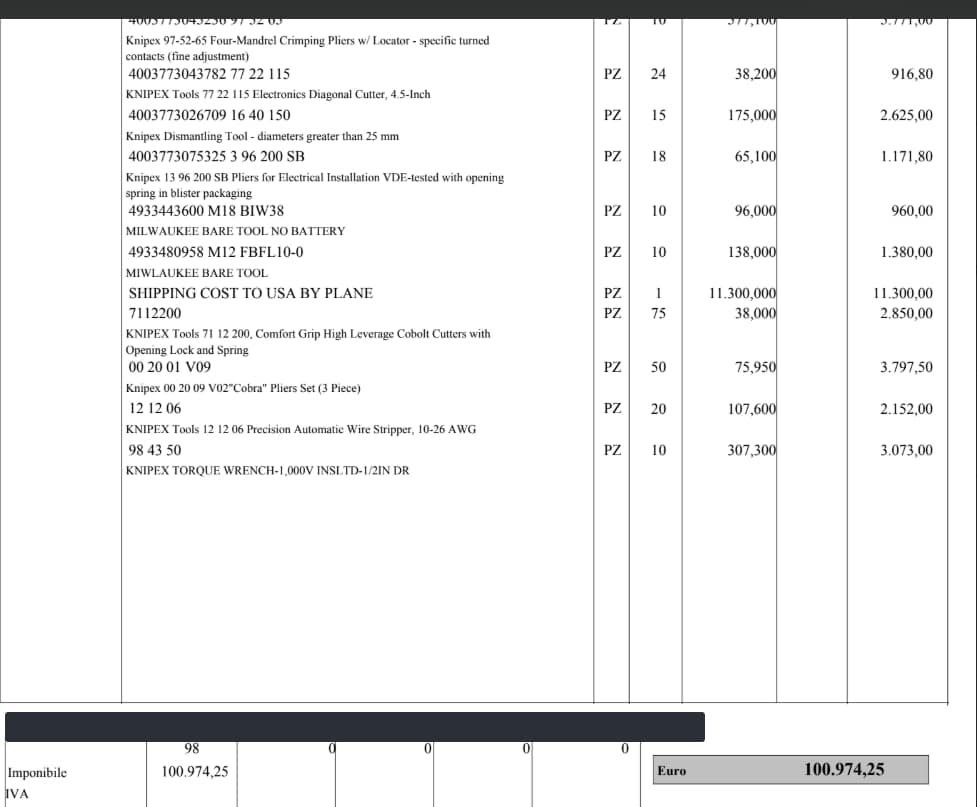
Every line is itemized and identifiable. Product description, brand, manufacturer part or model number, and a UPC or EAN where there is one. "Assorted power tools" is not a description. A reviewer has to be able to set the line on your invoice beside the ASIN on the listing and see the same product.
The quantities carry the sales. Amazon's guidance is that invoices should reflect your sales volume for the period under review. In practice the units on your invoices need to cover what you have sold plus what you still hold. Sell 400 units against an invoice for 60 and the reviewer finds the gap, which reads as sourcing the rest somewhere undocumented.
The date sits inside the window. Amazon's published invoice requirements for appealing a policy violation ask for documents issued within the last 365 days. Some requests cite a shorter period, so read the actual message rather than working from what someone told you in a Facebook group. Either way, an invoice from two years ago fails on its face, and older stock needs a covering explanation rather than silence.
The document is unaltered, in a fixed format. PDF, JPG or PNG. Not a spreadsheet, not a Word file, not a screenshot of an order page. Nothing typed over, nothing whited out, nothing regenerated to look tidier. Amazon's own wording permits you to remove pricing information and requires the rest to stay visible, and it undertakes to keep supplier contact details confidential. So redact the prices if you want to. Do not touch totals, quantities, names or dates, and do not edit anything.
Payment is evidenced. Either the invoice shows a zero balance, or it travels with the wire confirmation, canceled check or card statement that settled it. An unpaid invoice proves an intention. It does not prove a transaction.
The part that is not on the document
Then there is the verification call, which is the step almost nobody plans for and the one that quietly decides a good share of these reviews.
Amazon says it may contact your supplier. When it does, someone at that company has to pick up, recognize your business name, and confirm the transaction. That sounds trivial. It isn't. A supplier who is unreachable, or who has nobody whose job this is, or whose staff cannot connect your entity name to an order, will sink an otherwise sound submission. You will never see the call or whatever note came out of it.
Which makes it a fair thing to ask about before you place an order rather than after a request lands. Who answers, on what number, and will they confirm an order to a third party calling out of the blue? A supplier who has been asked this before will have a clear answer ready.
The Letter of Authorization misconception
A Letter of Authorization issued by a distributor is worth nothing to Amazon. Any supplier offering one as a selling point is telling you something useful about themselves.
Amazon's requirements for an LOA are about intellectual property, not supply. It has to come from the rights holder, meaning the company that owns the trademark, on its letterhead, signed by someone authorized to bind it, naming the licensee, the specific IP granted, the territory and the term. A distributor cannot grant rights it does not own. A distribution agreement with no IP terms is not a substitute. Amazon may also verify the letter with the brand, at which point a letter the brand never issued becomes a considerably worse problem than no letter at all.
The two documents answer different questions anyway. Invoices evidence a chain of supply. An LOA evidences permission to use someone's intellectual property. Being handed the second when you asked for the first is a red flag, not a bonus.
Five questions to ask before you order
Not after a request lands. Before money moves:
- Will you issue the invoice in my registered business name and address, exactly as I give it to you?
- Will it itemize each product with brand, model or part number, and quantity?
- Will it carry your full legal name, address, telephone number and website?
- If a marketplace calls to verify it, who answers, and will they confirm the order?
- Can I see a redacted sample of your invoice format before I place an order?
Any supplier who genuinely trades with resellers has heard all five and can answer each in a sentence. Evasion on any one of them is itself the answer.
Where we stand on this
We issue invoices in the buyer's registered business name, itemized by product with the identifiers on them, carrying our full company details. We expect to be called, and we answer. Documentation is part of the transaction here, not a service sold alongside it.
What we will not do is tell you what a marketplace is going to decide. Amazon's reviewers make their own calls, they are not consistent about it, and any supplier promising you an outcome there is selling something they do not control. What a supplier does control is whether the paperwork is correct, complete, verifiable, and issued to the right entity.
That is the whole of what we promise. It is worth considerably more than the promise you cannot rely on.